

Capital Loan Malaysia: What It Is, Benefits & How to Choose the Right Loan

The fastest-growing Malaysian SMEs rarely fund expansion from savings alone. They combine government grants, smart borrowing, and the right type of capital loan for the right purpose. That mix, not the size of the loan, protects cash flow as a business scales.
This guide explains what capital loans are, who can benefit from them, how to choose the right financing option for your business, and what Malaysian SMEs should consider before applying.
1. Understanding Capital Loans
This part provides an overview of capital loans, explaining the different types available and their benefits.
1-1. What Is a Capital Loan?
A capital loan is business financing used to fund an investment that can help a company grow, expand, or improve its operations over time. Unlike financing meant to cover temporary cash flow gaps, capital financing is typically tied to a specific business objective, such as buying equipment, opening a new location, increasing production capacity, or investing in business improvements.
For Malaysian SMEs, access to capital can enable them to act on a growth opportunity without using all of the business's available cash at once. The key is to borrow an amount that matches the investment's purpose and the business's ability to repay it.
1-2. Types & Benefits of Capital Loans
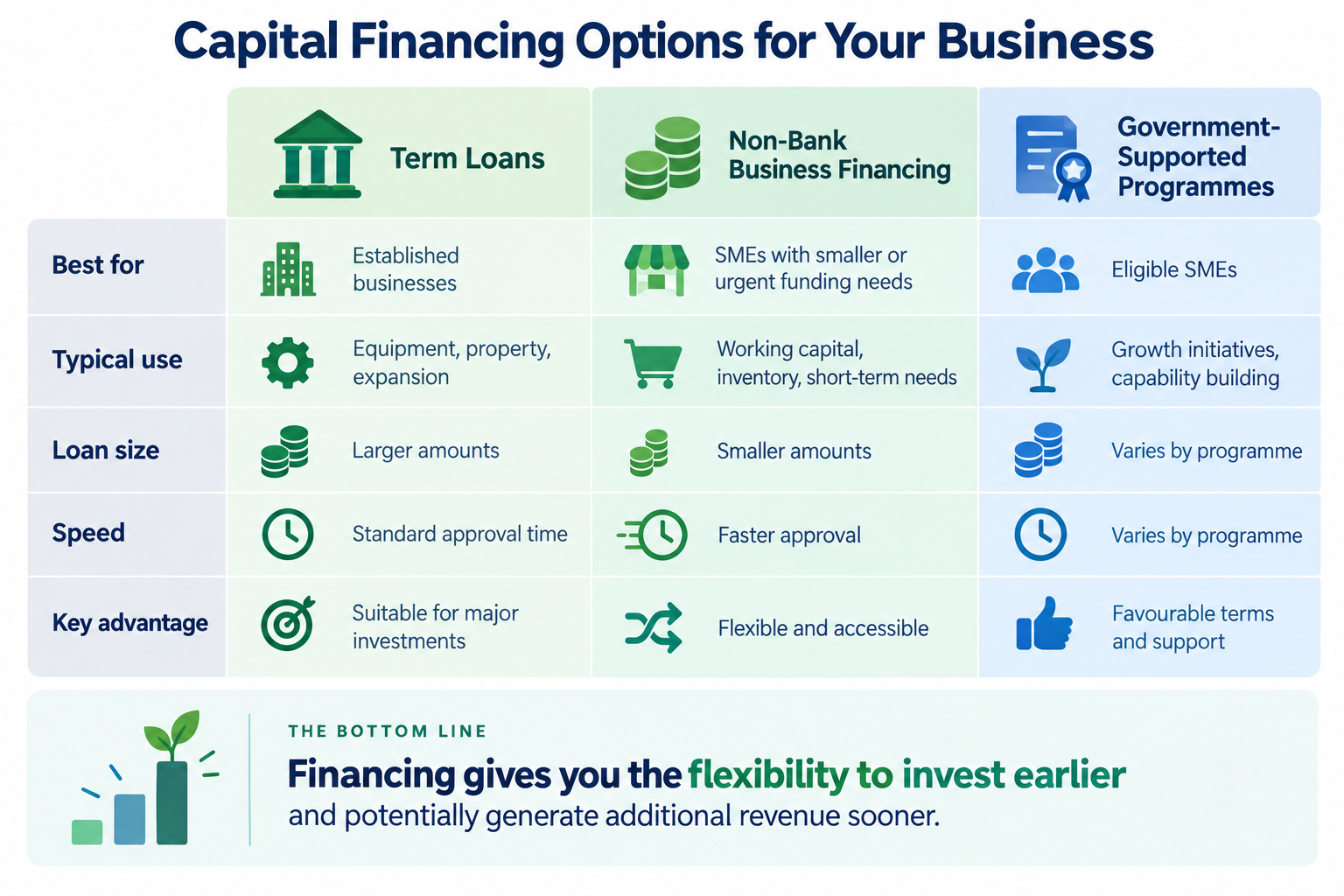
Capital financing options include term loans for major investments, non-bank financing for smaller or urgent needs, and government-supported programmes for eligible SMEs.
Key benefits:
- Access to funds when needed
- Faster investment and business growth
- Better cash flow management
- Flexible financing options based on business needs
The right option depends on the purpose of the funding, urgency, and repayment capacity.
1-3. Capital Loan vs Working Capital Loan: What Is the Difference?
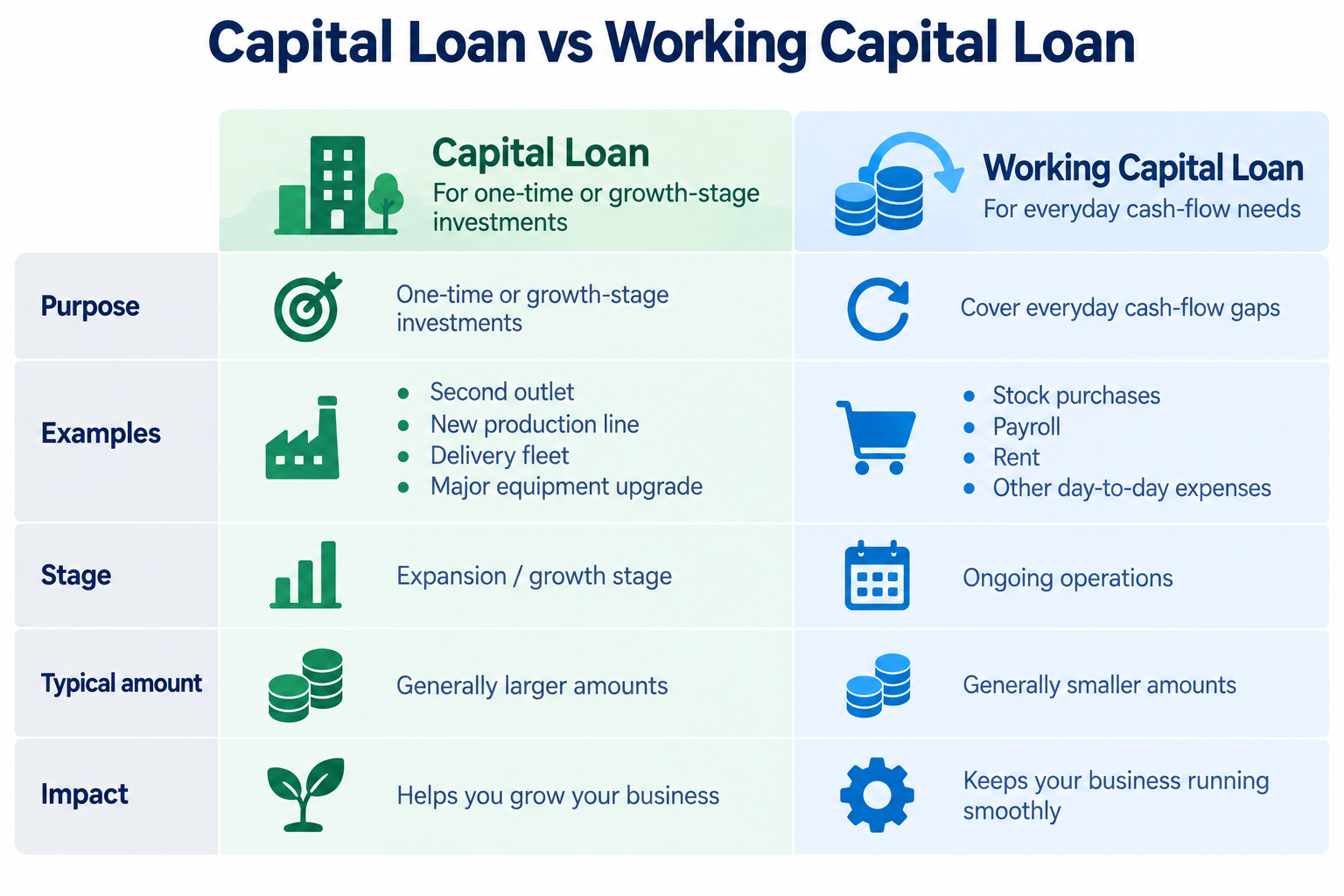
A capital loan funds growth. A working capital loan funds operations. Mixing the two up is one of the most common and most costly planning mistakes Malaysian SME owners make.
A capital loan is often used for one-time or growth-stage investments. Examples include a second outlet, a new production line, a delivery fleet, or a major equipment upgrade.
A working capital loan, on the other hand, covers everyday cash-flow gaps between paying suppliers and collecting from customers, such as stock purchases, payroll, and rent.
2. Who Should Apply for a Capital Loan?

Capital financing can be particularly useful for established SMEs that have identified a clear growth opportunity but don't want to fund the entire investment from existing cash reserves.
2-1. Businesses That Benefit Most
For example, capital financing may be suitable for:
・Retailers planning to open a new outlet
・F&B businesses looking to upgrade equipment
・Manufacturers seeking to increase production capacity
・Service businesses investing in tools and resources to serve more customers
Borrowing is generally most suitable when there is a clear business purpose and a realistic expectation that the investment will help generate additional revenue, improve efficiency, or increase capacity.
2-2. Common Uses of a Capital Loan
Businesses may use capital financing for a range of growth-related investments.
Common uses include:
・Purchasing machinery, equipment, or business vehicles
・Renovating business premises or opening a new outlet
・Increasing production capacity to handle larger orders
・Investing in technology or systems that improve operational efficiency
2-3. When Should You Apply?
The best time to apply is usually before a growth opportunity becomes urgent.
For example, a business that has identified a new location, received a larger customer order, or found equipment that could significantly improve productivity may benefit from arranging financing before the opportunity passes.
At the same time, borrowing too early can create unnecessary repayment pressure. Before applying, consider whether the investment will generate enough additional revenue or savings to justify the financing cost.
3. How to Choose the Right Capital Loan
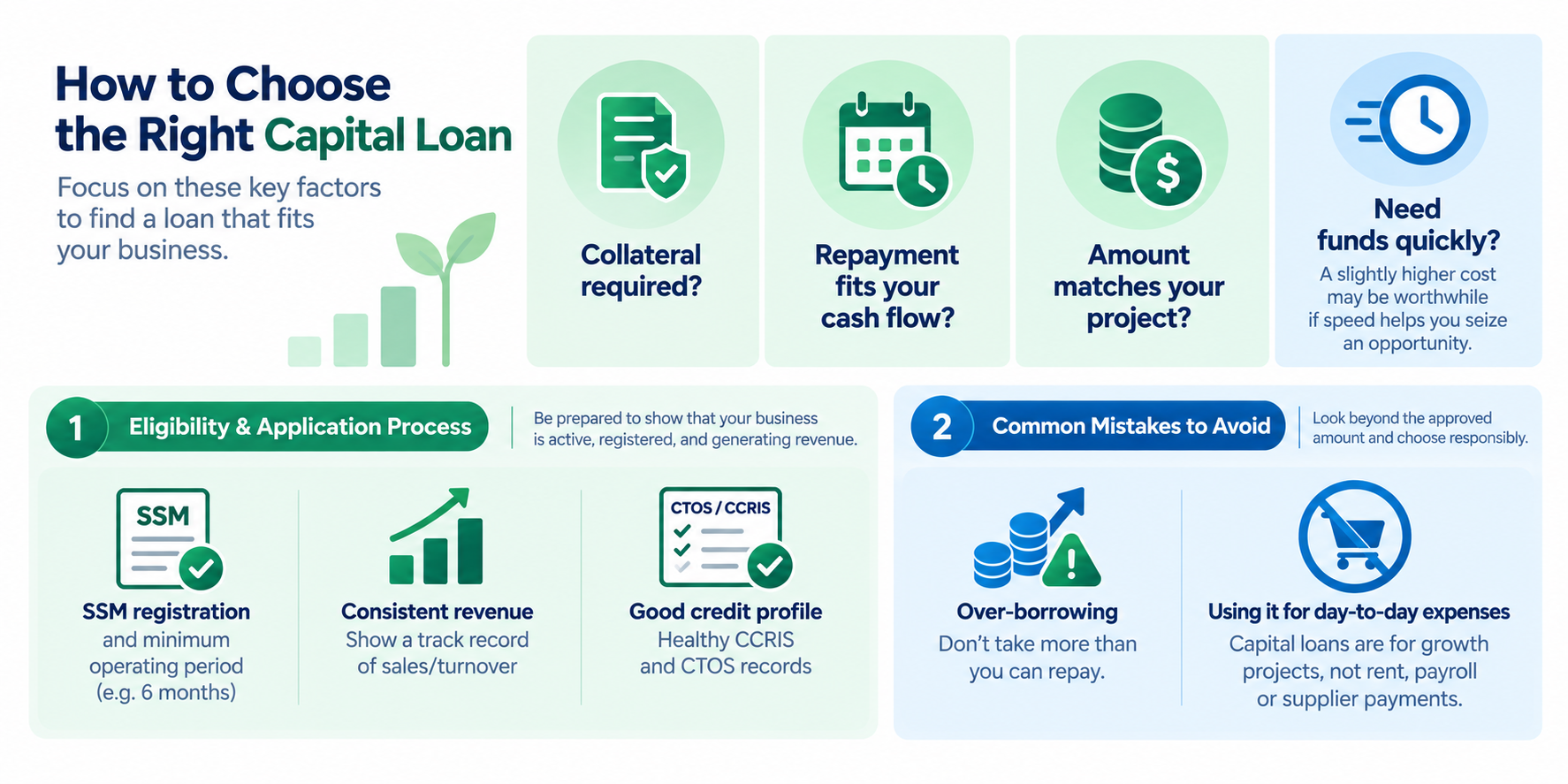
Consider whether the financing requires collateral, whether the repayment structure fits your expected cash flow, and whether the amount offered matches the project.
For SMEs, speed can also matter. A slightly higher financing cost may be worthwhile if faster access to funds lets the business secure an opportunity it would otherwise miss.
3-1. Eligibility & Application Process
Eligibility varies by lender, but SMEs should generally be prepared to show the business is active, registered, and generating revenue. Lenders may also review the business's operating history, turnover, existing commitments, and credit profile.
① SSM Registration & Minimum Business Operating Period
Almost every lender requires the business to be registered with the Companies Commission of Malaysia (SSM) and to have a minimum operating history. Six months of operations is a common minimum threshold across SME grant and financing programmes in 2026 [1]. Individual lenders may set different requirements.
② Minimum Annual Turnover Requirements
Lenders generally want to see consistent revenue, not necessarily a large one. A clear pattern of monthly sales, even if modest, often matters more to an underwriter than a single strong month followed by a quiet one.
③ CTOS / CCRIS Health Check
Before approving any facility, lenders check a business and its directors against Malaysia's two main credit reference systems: CCRIS, the Central Credit Reference System managed by Bank Negara Malaysia, and CTOS, a licensed private credit reporting agency that issues the MyCTOS Score Report [2]. A clean repayment history on existing facilities, even small ones, strengthens a new application far more than having no credit history at all.
3-2. Common Mistakes to Avoid
Don't compare financing options based on the approved amount alone. Look at the total cost, repayment period, monthly repayment, approval requirements, and speed of funding.
① Over-Borrowing Beyond Your Repayment Capacity
A larger approved amount is not always the better choice. Borrowing close to the maximum a lender offers, rather than the amount the growth project actually needs, is one of the most common ways in which healthy SMEs end up overleveraged within a year or two.
② Using Capital Loans to Cover Day-to-Day Operating Expenses
A capital loan is structured around a growth project with a clear return, such as new equipment or a second outlet. Using it instead to cover recurring shortfalls, rent, payroll, or supplier payments usually signals a cash flow problem. A term loan will not fix this. You may need a working capital facility instead. You may also need to review the business's pricing and costs.
4. How FundingBee Helps Malaysian Businesses Access Growth Capital Fast
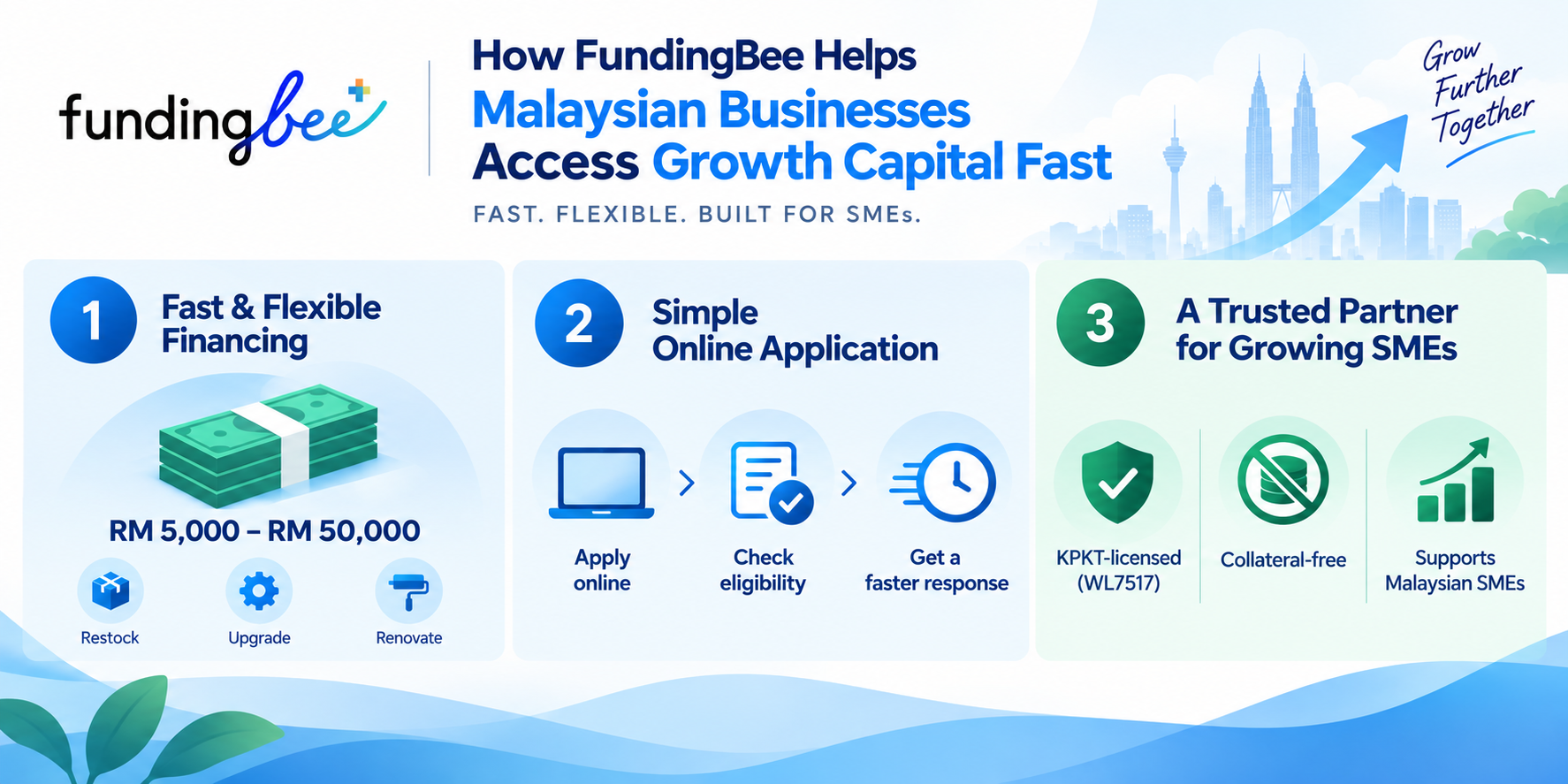
For SME owners who have already explored grants and bank options but still need fast, flexible funding to act on a growth opportunity, FundingBee can help.
4-1. Fast & Flexible Financing
When a growth opportunity needs funding quickly, a lengthy financing process can mean missing it altogether.
FundingBee provides business financing from RM5,000 to RM50,000, giving Malaysian SMEs access to smaller capital for practical needs such as restocking, equipment upgrades, or completing a renovation project.
4-2. Simple Online Application
FundingBee's online application makes the financing process straightforward for SME owners. Instead of navigating a lengthy traditional lending process, business owners can submit their application online and check their eligibility for business financing.
This can be particularly useful for SMEs that need to respond quickly to a business opportunity and want to explore financing without committing to a large bank facility.
4-3. Support for Growing SMEs
FundingBee is a KPKT-licensed (Licence No. WL7517) non-bank lender focused on Malaysian SMEs, including businesses that may not fit the traditional bank lending profile. It provides collateral-free business financing, with assessment based on factors such as the business's operating history and repayment capacity.
For SMEs looking for a practical way to fund the next stage of their business, FundingBee can provide an additional financing option alongside grants, bank financing, and other sources of capital.
Ready to see what you qualify for? Register an account and apply for a FundingBee Micro Business Loan to find out how fast your growth plan could be funded.
Knowledge is step one. Funding is step two. When you're ready to act, we're ready to move fast. Apply Now
References
[1] Press (Digital PR Malaysia) — How to Apply for 2026 SME Grants & Digitalisation Funds. https://www.press.com.my/accounting-tax/how-2026-sme-digitalisation-grants/
[2] UOB Business Insights — Get Your SME Loan Approved with the Help of the SJPP Loan Scheme. https://www.uob.com.my/business/sme-hub/insights/get-your-sme-loan-approved.page

.jpeg)