
Stories Make People Care: What I Learned from a Startup Co-Creation Event in Japan
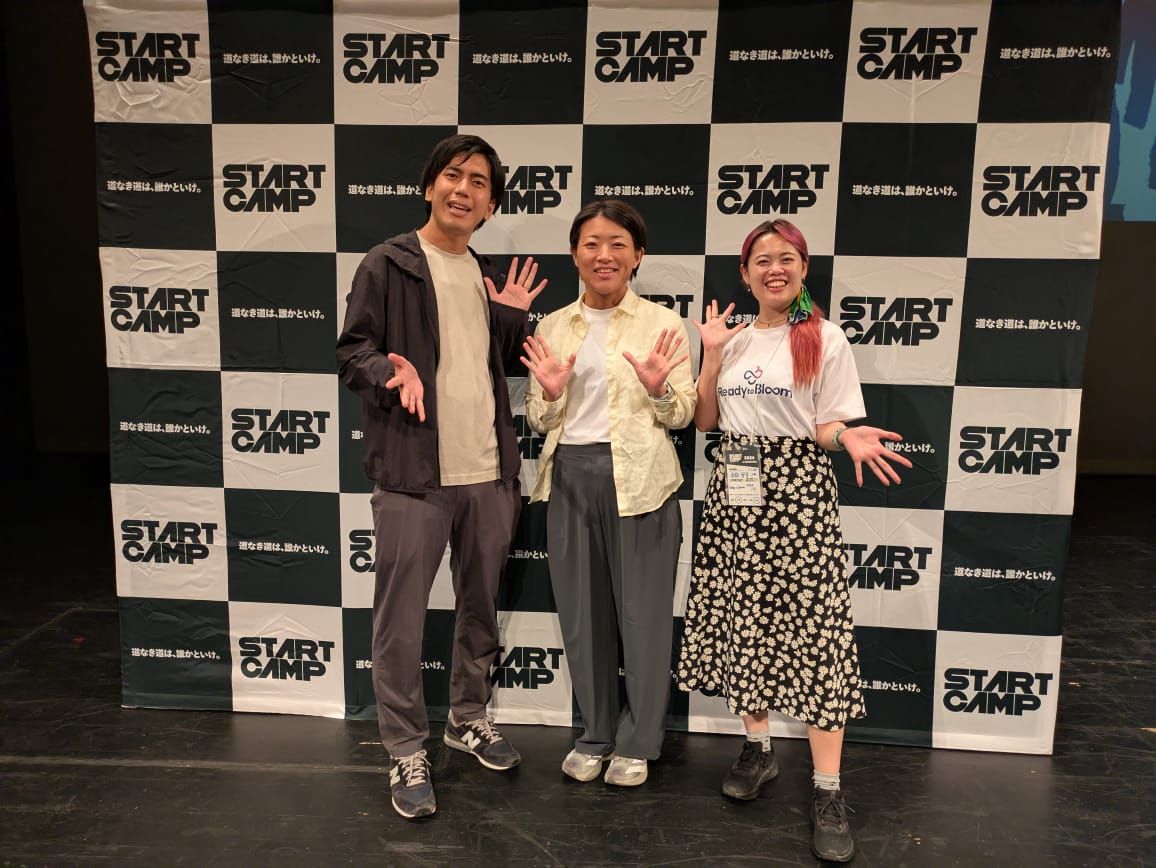
During my recent trip back to Japan, I joined START CAMP, a two-day startup co-creation event in Shizuoka.
Japan has a growing ecosystem of programs and initiatives that support startups and encourage collaboration between startups, large corporations, financial institutions, investors, and other organisations. START CAMP is one example.
Rather than simply listening to talks or exchanging business cards, participants from different backgrounds are brought together to create new business ideas.
Around 200 people participated this year, including people from large companies, startups, financial institutions, VC firms, NGOs, and other organisations. We were divided into themes including agriculture, manufacturing, healthcare and wellbeing, technology and AI, and environmental resilience.
From Different Backgrounds to One Team
I joined the manufacturing and wellbeing theme, where many participants were working on businesses in emerging markets.
I ended up in a three-person team with members in Malaysia, Uganda, and India. Although our businesses were completely different, we shared a common interest in using business to solve social challenges.
Since I work in Malaysia, I suggested using Malaysia as our case study. After discussing several possibilities, we focused on one very visible challenge: obesity and health. Malaysia has one of the highest obesity rates in Southeast Asia, making it a clear and relevant issue for our short project.1)
Creating a Business Idea in Just a Few Hours
The challenge was that we had roughly one to two hours to identify a problem, research the market, develop a business concept, and prepare our pitch.
We moved quickly, looking at market size and social impact while discussing how existing fitness and social platforms could inspire our idea.
We developed a digital platform designed to encourage people to become more physically active.
Users could record activities such as walking, earn credits based on their activity, and exchange those credits for products and services from partner companies, such as healthy food or sports shoes.
We were particularly interested in people who aren't naturally enthusiastic about exercise—those who might exercise if someone encourages them but otherwise do very little.
We thought social elements could help. Users could see other people's activities in a feed, discover new ways to exercise, and stay motivated through a sense of community.
Companies could participate by offering products or services in exchange for the credits users earned.
It was an early-stage idea created under significant time pressure, and our team did not make it to the final pitch.
But the experience itself was extremely valuable.
What the Finalists Taught Me
One of my biggest takeaways came from watching the teams that did make it to the final pitch.
I noticed the strongest presentations weren't necessarily the ones with the most impressive numbers or the most sophisticated business models.
They were the ones that made you feel that the business was real.
One team developed a concept around using art created by people with disabilities to transform unused advertising signs in rural areas of Kagawa.
The idea could create new income opportunities and greater independence for people with disabilities, while also contributing to local revitalization.
What made their presentation memorable was the use of real images of the location, the signs, and the environment.
Suddenly, you could picture it.
It no longer felt like an abstract idea on a slide. It felt like something that could actually exist.
Another team also did a great job of communicating the personal experiences and motivations behind their business.
That made me realize once again how important storytelling and authenticity are when communicating a business.
Numbers and Logic Matter. But Stories Make People Care.

Of course, numbers and logic are essential.
Market size matters. Business models matter. Impact metrics matter.
But they are not always enough to make people care.
People also want to understand:
Why are you doing this?
Why does this problem matter to you?
What experience made you decide to work on it?
When that personal motivation comes through, supported by real photographs, places, and people, an idea becomes much more tangible.
This doesn't mean a good pitch should be purely emotional. A compelling story without a sound business model is not enough.
The story explains why someone cares enough to make it happen.
And real images help people see what that future could look like.
What I Took Away from the Experience
Over the two days, I also spoke with around 100 people from industries, countries, and backgrounds far beyond my usual network. Some conversations led to potential business connections, while others gave me new perspectives on challenges I thought I already understood.
Many of these connections came through Japan's active startup ecosystem, where startups can meet corporations, investors, support organizations, and other entrepreneurs not only to raise funding, but also to exchange ideas and build partnerships. My own connection with the START CAMP organizers began through an introduction from an earlier startup program, which later led to opportunities to participate in other events and connect with organizations working on social and sustainable challenges.
We did not leave START CAMP with a finished business, but we left with new perspectives, relationships, and possibilities.
Perhaps that is the real value of co-creation: sometimes, the best ideas do not come from thinking alone, but from putting very different people in the same room and building something together.
I am looking forward to seeing where these new connections lead.
Referene:
1)WHO Western Pacific region
https://data.worldobesity.org/region/who-western-pacific-region-7/#data_prevalence
Want more perspectives from the people building the future of SME finance? Read more conversations with founders and the team behind FundingBee. Explore CEO interviews