
Why More SMEs Are Choosing Non-Bank Business Loans

Non-bank business loans are no longer viewed as a last resort for small and medium-sized enterprises. In fact, about 70% of SMEs in Southeast Asia—including many in Malaysia—originally started their businesses using personal savings or support from family and friends, because access to traditional bank financing remains limited; only around 17% of Malaysian SMEs receive bank funding.
This highlights a longstanding challenge: many SMEs struggle to access conventional credit even when they have viable growth prospects.
In recent years, more SMEs have chosen alternative and digital lenders—not because they lack alternatives, but because these lenders align more closely with how modern businesses grow and operate.
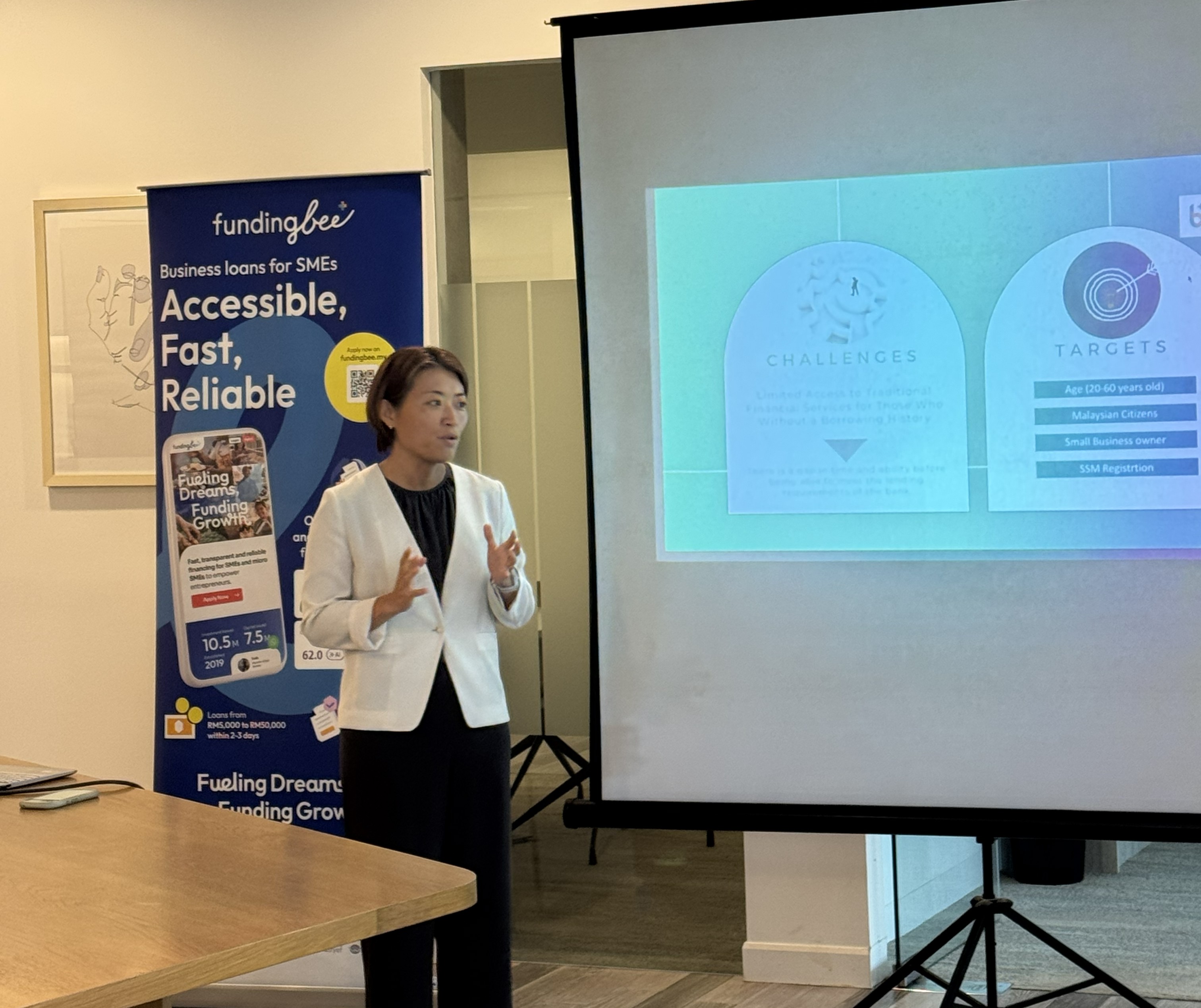
Fumiko, CEO of FundingBee, believes this shift is due to a fundamental alignment between digital lenders and modern business needs
Do alternative business loans require collateral or assets?
One of the most reassuring answers for small business owners is that the answer is not necessarily.
FundingBee focuses on micro and SME loans specifically designed for businesses that do not yet own land, buildings, or vehicles. “Most early-stage SMEs have none of those, and that’s assumed in our model,” Fumiko explains.
To manage risk responsibly, FundingBee typically offers smaller loan amounts—up to RM50,000—without requiring collateral. For larger financing needs, some non-bank lenders use asset financing structures, in which vehicles or equipment purchased with the loan serve as collateral.
Growing Businesses, Not Struggling Ones
One of the most common misconceptions about SME financing is that it primarily serves distressed businesses. According to Fumiko, most applicants are healthy, growing SMEs. These businesses are expanding operations, opening second locations, or investing in equipment and inventory to meet rising demand.
In many cases, the challenge is not profitability but timing. SMEs often need to pay deposits, secure inventory, or commit to suppliers before revenue is realised. Traditional loan processes are rarely designed for this speedy growth.
Speed as a Business Advantage
Compared with traditional bank loans, alternative business loans offer significantly faster access to funds. While bank approvals can take several weeks, Funding bee can typically complete credit assessments within two to three business days, with funds disbursed within 24 hours of approval.
Entirely digital application processes mean business owners no longer need to visit branches or submit extensive paperwork. This convenience is particularly helpful for busy SME owners, enabling them to complete the application process efficiently without disrupting day-to-day business operations.
Speed Does Not Mean Risky
Some SME owners assume that speedy financing increases risk. Fumiko strongly disagrees. Digital lenders today combine traditional credit evaluation with modern verification tools to maintain lending quality.
Beyond reviewing credit bureau records such as CTOS and CCRIS, lenders assess repayment behaviour and cash flow patterns. Online interviews assess financial awareness and business planning, while virtual site inspections verify operational performance. GPS checks are sometimes used to confirm registered business locations. These digital methods replicate—and, in some cases, enhance—the due diligence traditionally conducted through in-person bank visits.
Using Banks and Non-Bank Loans Strategically
Fumiko emphasises that non-bank financing should not replace bank loans entirely. Banks continue to offer advantages such as lower interest rates and larger long-term facilities once a business is established.
However, banks also have lending limits and slower approval cycles. Non-bank loans work best as a complementary tool—particularly when rapid business expansion is outpacing bank processes or when immediate investment is required to seize opportunities.
A Shift in Trust and Perception
There was a time when non-bank lenders were considered a “last resort.” That perception is changing rapidly. Improved regulation, licensing, and transparency have strengthened trust in fintech lenders.
Today’s SME owners are also more financially literate. Rather than borrowing out of desperation, they are deliberately choosing non-bank lenders—valuing speed, clarity, and accessibility.
A Message to First-Time Applicants
For SME owners considering an alternative business loan for the first time, Fumiko’s advice is simple: experience the process firsthand.
With minimal documentation, rapid assessments, and a fully digital experience, many business owners quickly realise how well SME financing aligns with the realities of modern business growth.
Ready to put this into practice? Talk to a FundingBee advisor — no commitment, just clarity. Book a free consultation