
From Corporate Comfort to Founder’s Resolve: Why I Chose to Build My Own Company
.png)
Today, I run a financial startup in Malaysia. But for most of my career, however, I was an employee, not an entrepreneur.
I spent a decade at Japanese financial institutions, developing a strong interest in microfinance. That curiosity led me to the UK for graduate studies and later to Bangladesh, where I gained hands-on experience in the field. It was there that the idea of starting my own business first began to take shape.
This article focuses on one defining chapter—my time at an IT startup in Bangladesh—and how it ultimately led me to entrepreneurship.
Running an Offshore Operation in One of Asia’s Poorest Countries
A Tokyo-based startup was seeking someone to oversee its offshore development operation in Bangladesh. Despite having no engineering background, I was appointed CEO to manage the local business.
At the time, Bangladesh was often described as one of the poorest countries in Asia. The gap—across culture, infrastructure, and assumptions—was significant. This was the environment in which I began my role as CEO.
Learning the Limits of Influence Without Authority
Being an employee comes with security: stable income, shared responsibility, and limited personal risk. Over time, however, I became aware of the constraints that came with it.
I acted as a bridge between headquarters in Japan and the local team, sharing insights from the ground. Yet decisions were shaped by distance and structure. Although I was responsible for outcomes, authority remained elsewhere.
Headquarters funded a team of around 30 people, and operations followed a rigid framework. While the structure offered safety, decision-making was slow—even as local results were expected quickly.
This tension was clearest in hiring engineers. Decisions adhered to Japanese standards, despite local realities that demanded flexibility. I could see more effective approaches, but without authority, execution was limited—while accountability stayed with me.
That gap clarified something for me.
If asked why I chose entrepreneurship, my answer is simple: I wanted ownership of final decisions.
Leaving employment removed the safety net, but it gave me responsibility across both strategy and execution. To align decisions with reality and move faster, authority matters.
Encounters That Changed My Direction
During that period, I met local entrepreneurs who showed me another way forward.
One founder was building a voice-input receipt system from scratch. Starting with nothing, he raised funding to address poverty-related challenges. His determination left a lasting impact on me.
Later, I met another IT entrepreneur preparing for a new venture. Through conversations, we realised that combining my finance background with his technical expertise could help expand access to capital across Asia.
We chose Malaysia—a hub with a strong startup ecosystem—as our base. That decision marked the start of Funding Bee.
A Note to Aspiring Entrepreneurs
My advice is straightforward:
Do not start a business until you find work you truly believe is your calling.
In the early years, revenue rarely followed projections. For a long time, I paid myself nothing and relied on savings. What sustained me was a genuine belief in microfinance.
When you truly care about the work, it carries you through uncertainty. Even hardship becomes manageable.
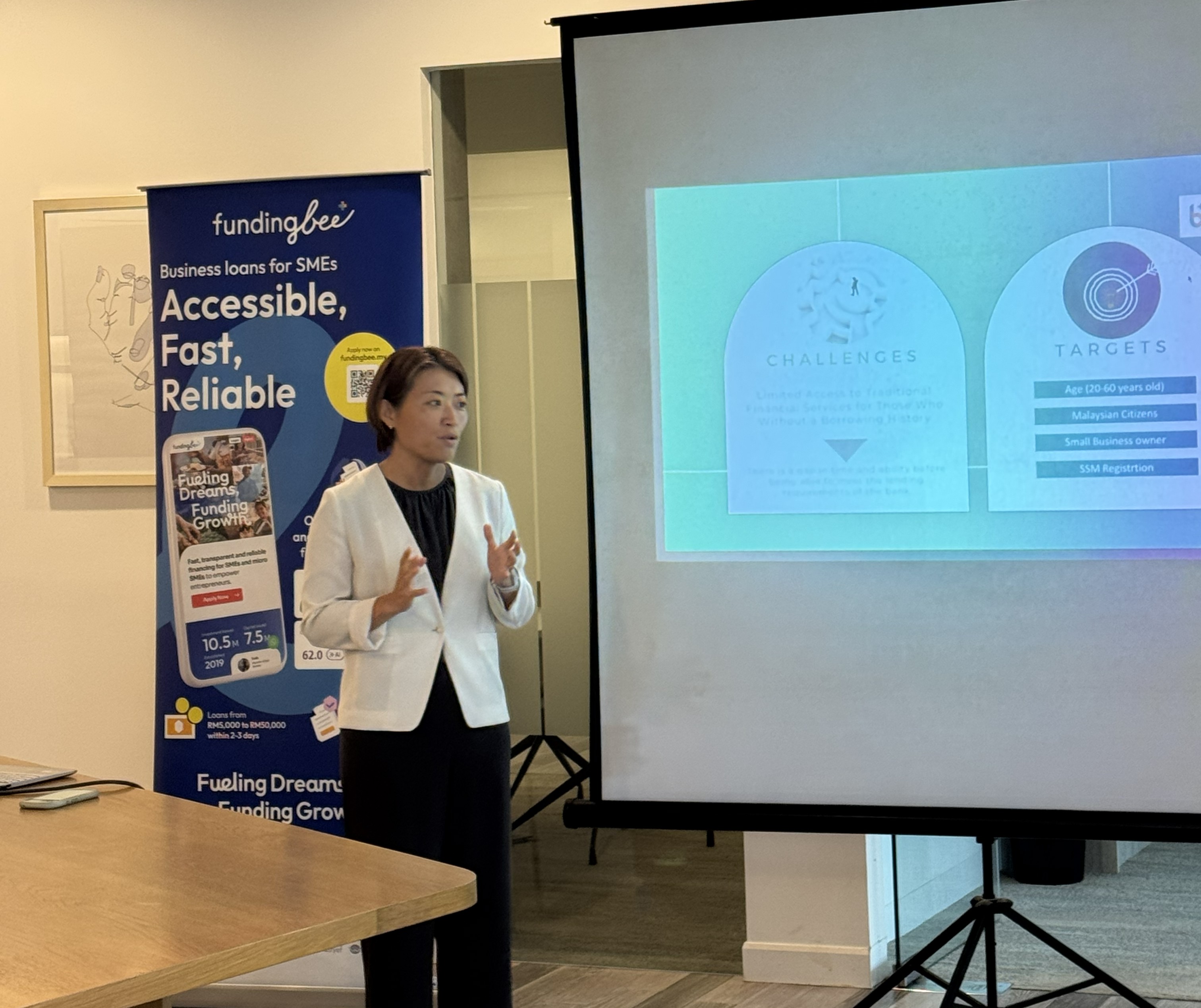
At Funding Bee, we aim to support people who, like my former self, are close to giving up on a business they care deeply about, simply because they lack access to capital.
Let’s take that first step—toward what you believe in—together
Want more perspectives from the people building the future of SME finance? Read more conversations with founders and the team behind FundingBee. Explore CEO interviews